News
& events.
- you can find news about ECONNECT Project, as well as events concerning ecological occurences across Alps;
- you can use the calendar tool in order to be updated about ECONNECT occurences and meetings;
- you can subscribe to ECONNECT newsletter (download available at the download area).
- you can also subscribe to ECONNECT news RSS here.
29 November 2011
After three years of research and fieldwork, the European project ECONNECT comes to a conclusion: the results of the final conference
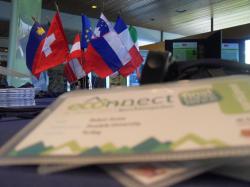
The closing conference for the ECONNECT project was held in Berchtesgaden, Germany, attended by political representatives of the six Alpine countries, as well as experts and scientific researchers from local and international institutions. Project team members presented the results of the project, which was one of the first to deal with the issue of Alpine connectivity that applied an integrated and multidisciplinary approach.
The final conference included debates and proposals of significant interest for the protection, improvement and development of ecological connectivity throughout the Alpine range. “The most important and, in some ways, most surprising result, is that connectivity in the Alps is actually still adequate for many species” stated Dr. Chris Walzer of the Research Institute of Wildlife Ecology of the University of Veterinary Medicine Vienna, who is the lead partner of ECONNECT. “But this is precisely why we must stay on guard. The connections between Alpine habitats have to be preserved and maintained by wise and farsighted management strategies covering the entire territory and by means of specific tools.” One of the tools developed by ECONNECT researchers is the highly innovative JECAMI platform. This is a computer-based system for mapping ecological barriers and corridors that allows users to view the potential migration routes of a given species, and thus to take them into account during regional land-use planning processes in order to ensure their protection.
Some of the other tangible results are the actions put in place in the seven pilot regions of the project. ECONNECT has provided a concrete contribution for protecting the ecological linkages in these regions, as can be seen by what has happened in the Maritime Alps Natural Park. Most importantly, apart from implementing a system for monitoring the cables of ski-lifts and cable cars, the research performed for ECONNECT by the Park’s staff made it possible to alert the public authorities involved to the existence of an important wildlife migration corridor in an area where a construction project had been planned, which was stopped as a result.
Another striking result of the ECONNECT project is that the most significant barriers which have to be overcome for achieving effective international collaboration on ecosystem protection are cultural. ECONNECT has been an important opportunity for discussing and developing solutions for these issues from a broader perspective, thus moving ahead in the direction of creating ecological connectivity in the Alps. Among the results achieved, perhaps the most straightforward is the sharing of environmental data throughout Europe to support research activities. Sharing of environmental data across the Alps is an essential precondition for effective transnational collaboration on biodiversity conservation.
The program and all the presentations from the final conference are available on: http://www.econnectproject.eu/cms/q=download_area
28 November 2011
Connectivity in pictures
Besides classic communication tools such as newsletters and press releases ECONNECT used innovative tools to raise awareness among the general public and the stakeholders.
Non-professional photographers were invited to take pictures showing barriers and corridors in the Alps and to share their images through an on line service (Flickr). The three winning pictures of this photo contest have been selected by an international jury and awarded with attractive prizes.
More information: http://www.econnectproject.eu/cms/?q=news/en[CI-AU1]
ECONNECT also invited a class of photograph students to use their creativity to explore ecological connectivity. Images taken at the Alpi Marittime Natural Park (one of the ECONNECT pilot regions) were used to set up an exhibition that was displayed at the ECONNECT Final Conference. The exhibition can be borrowed from all interested organisations. Please email to Riccardo Nigro for further details: r.nigro@wwfrp.it.
More information: http://www.econnectproject.eu/cms/?q=download_area/en#ECONNECTexhibition
28 November 2011
Life+ Projects increasing ecological connections along the Alps-Apennines corridor and in Lapland
In the frame of the LIFE+ Nature & Biodiversity programme 2010 two projects regarding ecological connectivity have been implemented.
The objective of the project in Lombardy, Italy, is to increase the functionality of the ecological corridor between the Alps and the Apennines. The project area covers some 15 000 ha and includes 14 Natura 2000 sites. The project improved environmental quality and removed problems related to the crossing of artificial barriers.
The overall objective of the project in South-west Lapland is to increase ecological connectivity and establish a green infrastructure that will improve the vitality and coherence of the Natura 2000 network and raise the biodiversity of the forests in the project area.
Further information on the projects is available in the brochure Nature & Biodiversity. Projects 2010 on: http://ec.europa.eu/environment/life/publications/lifepublications/compilations/documents/natcompilation10.pdf (pages 19 and 40)
28 November 2011
Innovative online tools to assess and visualise connectivity
Real connectivity depends on a comprehensive planning process. The complex system of interactions and mechanisms in human societies calls for an analytic and comprehensive approach. In order to analyze and visualize ecological connectivity in the seven Pilot Regions, the Swiss National Park developed, in collaboration with the Arinas Company, a web application called JECAMI - “Joint Ecological Continuum Analyzing and Mapping Initiative”. JECAMI is now publically available for own analyses. Try it out and discover the interesting features it offers!
JECAMI combines three different approaches: the analysis of the landscape as a whole in a Continuum Suitability Index (CSI), the distribution and movements of specific key species with the Species Map Application (SMA) and the Connectivity Analysis of Riverine Landscapes (CARL). The CSI service defines a continuum suitability index from the interaction of ten different indices and allows for the measurement of connectivity suitability over a matrix of different areas. Through the SMA-Service it is possible to detect barriers and corridors for a specific animal species. The CARL module allows to study and quantify the fragmentation level of riverine landscapes and to identify the barriers effective in the longitudinal, lateral, vertical and temporal dimension.
More information: http://www.jecami.eu
28 November 2011
NGOs send joint message on the EU biodiversity strategy
A group of 22 nature conservation NGOs, joined in The European Habitat Forum EHF, have expressed their beliefs that increased political effort is required at EU and Member State level to meet the new EU biodiversity target of halting the loss of biodiversity and ecosystem services in the EU by 2020. The EHF welcomes the new EU biodiversity strategy, especially the new targets on ecological restoration and fisheries, but has some serious concerns about its implementation. A list of concerns and recommendations has been created.
More information: http://www.panparks.org/newsroom/news/2011/joint-ngo-message-on-the-eu-biodiversity-strategy
28 November 2011
Alpine barriers and the way they affect species
ECONNECT researchers analysed how barriers affect selected species: lynx, brown bear, wolf, red deer, black grouse, griffon vulture, bullhead and fish otter. For the terrestrial species they found out that altitude and forest availability are the major factors influencing species distribution. Especially in the Eastern Alps, species seem to benefit from more favourable conditions, probably due in part to the lower altitudes of the mountains. For the aquatic species the analysis showed that rivers, their riparian zones and floodplains are strongly fragmented by artificial structures, associated with human settlements and activities in the valleys.
Analysis also show that physical barriers are nearly never total barriers and animals still manage to overcome them, but movement and distribution is strongly limited. Evidently, it is vital to improve landscape permeability in providing species with functioning stepping stones (like green bridges or fish by-passes) to overcome barriers more easily. Urgent action is needed in human-dominated Alpine valleys, with their transport infrastructures and urban settlements. Furthermore, it is imperative to take into account species needs in the various future planning processes.
Ultimately, ECONNECT clearly shows that the essential prerequisite to life in the Alps is defining, accepting and implementing the trade-off between boundless development and the setting aside of large tracts of interconnected and permeable lands to maintain a higher biodiversity for regeneration and renewal to occur in the face of ecological disruption. Social acceptance and political buy-in are as important as building a green bridge to cross motorways.
The findings on the single species are published in dedicated reports (download from http://www.econnectproject.eu/cms/?q=download_area/en#Finaldocuments).
28 November 2011
Sharing experience to strengthen green infrastructure
How can green infrastructure and its contribution to the provision of a wide range of ecosystem services be strengthened at different spatial scales? An expert workshop on ‘Green infrastructure policies and projects’ aimed to answer this question. The workshop took place in Brussels on 7 September 2011 and was organised by Ecologic Institute with support from GHK and Institute for European Environmental Policy.
The workshop aimed to critically discuss the findings from two ongoing projects sponsored by the European Commission, looking in particular at the design, implementation and cost of green infrastructure (GI) projects as well as the effectiveness and efficiency of national and regional GI initiatives. A world café discussion facilitated the sharing of experiences from EU, national and regional administrative body representatives, practitioners, scientists and NGOs.
The results of the workshop will contribute to the development of the upcoming EU Strategy on Green Infrastructure and the EU 2020 Biodiversity Policy, which aim to strengthen GI in regional, national and EU policies and encourage GI initiatives. Investing in and building up GI needs smart and integrated approaches to spatial planning to ensure that Europe's limited land is turned into areas capable of providing multiple functions for nature and society.
Author: McKenna Davis, Ecologic Institut
Further information and presentations: http://ecologic.eu/4286
28 November 2011
Documentation on ECONNECT results now available
The ECONNECT partners have now compiled their results in a series of publications. There are dedicated reports for ECONNECT’s key target groups: all different kinds of stakeholders (final booklet), experts (synopsis, species reports, reports on legal barriers), policy makers (policy recommendations) and practitioners (implementation recommendations). All final documents of ECONNECT can be downloaded from http://www.econnectproject.eu/cms/?q=download_area/en#Finaldocuments.
Final booklet: WEBS OF LIFE – biodiversity needs ecological connectivity. Results from the ECONNECT project
On 68 pages the final booklet presents all ECONNECT findings and results in an easily comprehensible way which is suitable for a wide range of actors. The booklet describes among others the project’s major achievements, its results on the connectivity status and needs of six key species such as lynx or grouse as well as examples on the experiences of the seven pilot regions and the actions they carried out in order to improve connectivity on the ground.
The booklet is available in English, German, French, Italian and Slovenian. For a free printed copy please email to Riccardo Nigro: r.nigro@wwfrp.it.
Synopsis: Towards ecological connectivity in the Alps. The ECONNECT Project Synopsis
The synopsis gives an insight into ECONNECT’s work and findings from a more scientific point of view. It presents for example the project’s results on different kinds of barriers: in the legal framework, in society, related to data and in the field. The innovative connectivity mapping and analysis tool JECAMI is explained with its different parts on continuum suitability, on species, on priority areas and on riverine landscapes. The synopsis closes with an outlook on future challenges.
The synopsis is available in English. For a free printed copy please email to Leopold Füreder: Leopold.Fuereder@uibk.ac.at.
Implementation Recommendations
In order to be able to respond to threats such as pollution, invasive species or unsustainable use an active management of protected areas and the active implementation of connectivity measures are needed. During the ECONNECT project, seven Pilot regions under the leadership of protected area administrations applied a common methodology to determine and realize different concrete measures and to establish spatial links in order to improve the situation of ecological connectivity in their territory. The experiences and lessons learnt out of this three years’ process have been summarized in the ‘Implementation Recommendations’ which are mainly addressing other protected area administrations or experts working in the field of nature conservation.
The implementation recommendations are available in English and soon also in German, French, Italian and Slovenian.
Policy recommendations
With the policy recommendations the ECONNECT partners intend to inform policy makers and decision makers at all levels, from local to regional to trans-national, about key conclusions of the project. The purpose of the 16 pages report is to stimulate further development of and support for the ecological connectivity concept. The five main issues are valorisation of ecological connectivity, legal framework, spatial planning, protected areas and data management.
The policy recommendations are available in English and soon also in German, French, Italian and Slovenian.
Reports on key species: lynx, wolf, brown bear, red deer, griffon vulture, black grouse
ECONNECT identified the anthropogenic barriers that influence the movements of different indicator species, based on their ecological requirements. The reports on lynx, wolf, brown bear, red deer, griffon vulture and black grouse each show areas of actual and potential distribution and barriers that limit ecological connectivity.
The species reports are available in English on the ECONNECT web (downloads, final documents).
Reports on legal barriers
As soon as further financial resources will be available outside the ECONNECT Project, the Italian Ministry for the Environment, Land and Sea, as lead partner of WP6, intends to autonomously issue probably by Spring 2012 a specific publication in English language (if possible also in Italian) regarding all the work carried out within the WP6 to be disseminated to the public both on the web and as a paper publication.
28 November 2011
The promotion of a common Legal Framework
The Alps consist of eight different countries, each of which has its own legal framework. A specific working group provided an overview of the different legislations in force at various governance levels that potentially affect ecological connectivity.The group identified strategies and tools to deal with such diversity and complexity. The analysis identified possible options to improve the consistency of regulations and protection strategies for protected areas and buffer zones across the Alpine range, as well as the implementation of “safe” ecological corridors from one administrative area to another.
The analysis work consisted of assessing the legal status of six Alpine countries with regard to protected areas and of analysing the legal situation of protected areas in four pairs of neighbouring Alpine states (Italy/France, Switzerland/Italy, Austria/Germany and Italy/Austria). In addition, in order to overcome the difficulties represented by the different legal statuses of neighbouring protected areas, EU legal tools such as the European Grouping of Territorial Cooperation were analysed and their feasibility assessed in relation to actual cases.
The ECONNECT researchers found that cooperation is required not only between the managers of protected areas but also between policy makers and across borders. Moreover, outside protected areas, the adoption of specific provisions (activities, projects, plans or programs outside or close to the core area) is required. In addition landscape protection is an important tool because landscape features are often seen as part of the ecological network. Furthermore the “cultural landscape”, in this context, has become an ever more important concept. Finally current existing cooperation tools in the form of agreements and twinning have to be institutionalized.
28 November 2011
One step further towards ecological connectivity in France
The French law on ecological networks (“trame verte et bleue”) has recently been updated with two decrees, which asses and divide the implementation roles of the state and the regions.
Further information: http://www.actu-environnement.com/ae/news/trames-verte-bleue-comites-coherence-ecologique-12914.php4#xtor=ES-6
28 November 2011
ECONNECT’s battle and success with data management
In order to analyse and visualize connectivity on an alpine-wide level as well as on a regional level for the seven Pilot Areas ECONNECT partners needed geographic data. Similar as in many other projects, they experienced that excessive time and resources had to be invested for procuring, processing and analysing data from a variety of sources. Therefore ECONNECT recommends making publicly funded data openly available and easily accessible through a centralised data management platform.
ECONNECT researchers set up a repository of geographic data necessary for the analysis of ecological networks, and the detection of barriers for selected species in the Alps. A number of maps were produced for each Pilot Region as well as for the Alps visualising the connections between protected areas in the Pilot Regions and analysis outcomes such as the modelling results for the selected key species on the Alpine-wide level. Collected data and maps are available for the interested public in an online geodata archive.
More information: http://gis.eurac.edu/
21 September 2011
ECONNECT: FROM ECOLOGICAL ISLANDS TO ECOLOGICAL NETWORKS IN THE ALPS
 G. Violino.jpg)
Ecological connectivity refers to how well habitats are connected physically and how easy it is for species to move between them. This is of great importance for the conservation of biological diversity, because many species and most ecological functions – many of which provide important ecosystem services for humans – require much larger areas than are available within park boundaries. The ECONNECT working groups analysed the issue of ecological connectivity in the Alpine Arc, one of the most biodiversity-rich and at the same time one of the most densely populated regions in Europe, from different perspectives: they took into account both the tangible effects of man-made physical barriers on the free movement of species, and —perhaps even more importantly – the legislative and institutional issues that must be tackled to build an effective Alpine ecological network.
The ECONNECT consortium developed a solid methodology to identify the key Alpine corridors and physical barriers. Researchers used the needs of six "indicator species" (wolf, brown bear, Eurasian lynx, griffon vulture, red deer and black grouse) to test connectivity and discovered, for instance, that 71,4% of all potential habitats for brown bears are located outside protected areas and that 64,5% of the suitable corridors for lynx are unprotected. Beyond physical barriers, the project partners also examined the “invisible barriers” to ecological connectivity, such as insufficient or conflicting laws and institutional arrangements. They designed a useful mapping tool to visualise barriers and corridors, which can illustrate the concept of ecological connectivity for policy makers and planners.
A NEW VISION FOR THE ALPINE ARC
“The ECONNECT project team envisions an enduringly restored and maintained ecological continuum, consisting of inter-connected landscapes, across the entire Alpine Arc region” affirmed Chris Walzer, lead partner of ECONNECT. “This requires conservation measures beyond individual ecological islands and even more importantly across all sectors of society. Connectivity is key to biodiversity conservation and the resilience of ecological processes on which we all depend”.
To reach this ambitious goal, it is essential that policy makers initiate farsighted decision-making processes that bring together scientists, politicians, practitioners and stakeholders to develop workable, integrated solutions that build on the ecological and economic opportunities for synergy and co –benefits of ecological connectivity.
ECONNECT IN THE FIELD: THE CASE OF THE BERCHTESGADEN-SALZBURG PILOT REGION
ECONNECT implemented solutions in seven pilot regions scattered all along the Alpine Arc. These actions were unified in their complexity; landscapes are the result of complex interactions between humans and other species, old and new economic constraints and opportunities, leisure activities and species’ needs. Recognizing this complexity is key to building an effective Alpine ecological network. “Within the Berchtesgaden-Salzburg pilot region, for instance, tangible actions aimed at maintaining the regional ecological network of open extensive grasslands as part of the cultural landscape and the regional identity have been implemented” says Michael Vogel, director of the Berchtesgaden National Park. “Open meadows and pastures are not only essential for regional flora and fauna, but also a representative part of the traditional landscape of the area. By preserving these areas we can maintain both their ecological and their scenic value with its high tourism potential”.
The ECONNECT team has come up with a number of recommendations for policy makers that will have to be heeded if we are to transform degraded and fragmented ecosystems into a healthy Alpine network. These policy recommendations along with numerous other important and interesting results will be presented at the ECONNECT final conference in Berchtesgaden (Germany) from 26 to 28 September 2011. The conference will be an opportunity to propose innovative ways of protecting our Alpine natural heritage and will provide a forum for discussing ways to place ecological connectivity firmly on the European political agenda.
12 September 2011
Econnect final conference
The results achieved by the ECONNECT project will be disseminated during its Final Conference, which will be held in Berchtesgaden (D) from September, 26th to 28th.
ECONNECT has aimed to enhance the ecological connectivity across the Alpine arch. After 3 years of work, the project is arriving at its end. The project developed a comprehensive methodology to preserve and enhance the Alpine ecological continuum. The actions in the field are presently being implemented within the seven Pilot Regions of the project.
The first day of the conference will put connectivity on the political Alpine agenda and will host prominent decision makers at European, national and regional levels. During the second day the results of ECONNECT will be presented in detail and finally, the third day will be dedicated to demonstrating the field-measures implemented by the Berchtesgaden National Park.
Click here to register and click the icon below to download the draft program:
28 June 2011
The winners of the Econnect photo contest
A prestigious group of experts chaired by Denis Curti, photography critic, director of the Milan-based offices of the photo-agency Contrasto and vice-president of Forma Foundation, met on June, 1st to assess the three best images taken by the participants to the Econnect photo contest.
The three winning pictures make visible the concepts of barrier and of limitation provoked by human actions on the territory to the movement of species. The pictures, although they represent a clear denunciation of the way human intervention has often negative effects on the territory, contain also a positive message: nature is able to overcome barriers or cohabit with them.
Despite the difficult subject (the concept of overcoming Alpine barriers), more than 100 pictures were sent by amateur photographers from different countries. The jury has taken into account not only the quality of the pictures, but also the photographer’s ability to transmit creatively, directly and emotionally the concepts of barrier and of free movement of species in the Alpine environment.
It is possible to see the best three pictures by downloading the PDF below. The three best pictures have been awarded with a weekend stay offered by the Locanda del Sorriso in the Natural Park Alpi Marittime (I), a weekend stay offered by the Alm & Wellnesshotel Alpenhof of Berchtesgaden (D) and a basket of typical products offered by WWF Oasi.
Moreover, thanks to the collaboration with Contrasto and Forma Foundation, it was launched earlier this year an initiative that involved the students of the Master of Photography and Visual Design of Milan (I). With the guidance of Prof. Giacomo Giannini and the coordination done by Prof. Francesco Zanot, the students were able to test themselves by producing a highly innovative work on the theme of ecological connectivity, from the story of the wolf Romeo who tries to overcome barriers to reach its Alpine Juliet to an imaginary natural selection that makes Alpine species evolve to overcome the barriers created by man.
The result of this work will be presented at the Econnect Final Conference, scheduled in Berchtesgaden (D) from 26 to 28 September. The conference will provide an important opportunity to show the results of the project to experts, institutions and planners at European and regional level, and to identify next steps to improve and protect the Alpine continuum that allows species to migrate and move freely along the Alps.
19 May 2011
International Conference Econnect: restoring the web of life
The conference will address and explore multidisciplinary interventions on the issue of ecological connectivity in the Alps building on the results of the ECONNECT project, established in 2008 by 16 European partners and co-funded by the European Territorial Cooperation Programme in the Alpine Space (INTERREG IVB).
The goal of the ECONNECT Final Conference is to inform on the situation of ecological connectivity in the Alpine space and sharing knowledge to improve the web of life in the Alps. It will provide a platform to discuss methodologies and concepts applied in the project in order to shape a common strategy for achieving good ecological connectivity. In particular, the Guidelines and Recommendations developed for the actual implementation of measures of connectivity in the seven Pilot Regions participating in the project will be presented and discussed.
The 3rd day will be a field-visit to observe solutions implemented in the Pilot Region of "Berchtesgaden - Salzburg" in order to realize and improve on the ecological connectivity in the area.
With a wide range of participants from many different countries and varied institutions, each dealing with diverse aspects of ecological connectivity, the meeting in Berchtesgaden is the place to meet colleagues, partners and to participate in numerous interesting discussions.
For more information, write to info@econnectproject.eu. There is no fee to attend the conference. There will be simultaneous translation into English, German, French and Italian.
Thank you for disseminating this information to your local, national and international contacts.
9 May 2011
Berchtesgaden – Salzburg: revitalisation project of the Saletbach river
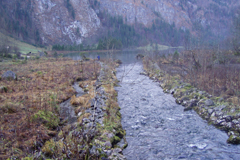
The "Saletbach" river could play an important role in the regional ecological network in the Pilot Region "Berchtesgaden-Salzburg". To reach this objective, Econnect is supporting the revitalisation of the Saletbach. In early summer of 2011 the riverbed will be widened in order to develop natural structures and dynamics. Moreover, a study will evaluate if it is necessary to reconnect the Saletbach with the lake Obersee. Relevant stakeholders have been informed about Econnect's activities at the Saletbach during an information evening in the beginning of March. The Pilot Region is also active in other fields. Soon a study on amphibians will start and activities to maintain extensively used grasslands of high ecological value will be implemented in early spring. A workshop on landscape planning and ecological networks for regional decision makers from the German and Austrian part of the Pilot Region is scheduled for May 2011.
Photo: ECONNECT will support the development of more natural dynamics of the Saletbach (© Berchtesgaden National Park)
27 April 2011
Future of protected areas: isolated islands or center of a green network?
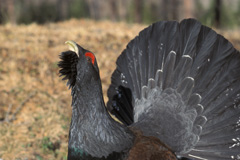
The Hohe Tauern National Park hosts an international conference on protected areas and their role in ecological networks. On 3rd and 4th May 2011 current projects and initiatives on ecological connectivity in Europe, in the Alps and in the Hohe Tauern Pilot Region will be presented in Mallnitz/A. The German speaking conference "Future of protected areas" will show the latest results and highlight the challenges for the future. The Hohe Tauern National Park as the largest protected area in the Alps is an essential part of their ecological network. Despite its remarkable size of more than 1800 km², it only offers habitats for a limited number of individuals of certain species. A golden eagle needs for example a territory which measures between 50 and 100 km², the home range of a bearded vulture may comprise several 100 km² and the movement radius of a lynx raises up to 1'000 km². A single protected area cannot ensure the protection of species with such huge spatial requirements. The unique biodiversity of the Alps can only be secured through a functioning ecological network. Further information and registration:
Picture:
More habitat for the wood grouse: improvement of habitat connectivity in and around the Hohe Tauern National Park
30 March 2011
The new Econnect newsletter is online
The new Econnect newsletter is available. Click on the file below to download it.
29 March 2011
TransEcoNet: the landscape functionality assessment
Actions within the TransEcoNet project create basic information for the conservation and development of ecological networks. One part of project activities is focusing on the assessment of biodiversity and ecosystem services in ecological networks. In the last months the main objective was to assess and visualize actual landscape functionality in selected transboundary areas in Central Europe based on parameters such as landscape structure, fragmentation, connectivity and biodiversity. This landscape functionality assessment has generated a series of maps which will provide valuable information for the action plan for sustainable management of ecological networks to be elaborated in 2011.
Further Information: http://www.transeconet.eu
Source: TransEcoNet News, Dec. 2010
29 March 2011
Use “The Wall” at your events to emphasize the importance of ecological connectivity
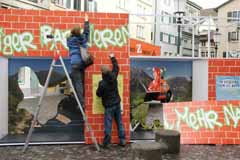
Are you organizing an event which aims at raising awareness on the problem of habitat fragmentation? Then borrow one of the six colourful installations the "Ecological Continuum Initiative" created for its action "The Wall". Borrowing as well as information material as artwork in four languages (d/f/i/sl) are at your free disposal. You only have to organize the transport from one of our storage places. More information and photos: http://www.alpine-ecological-network.org/about-us/ecological-continuum-initiative/the-wall/Die_Mauer_weiterverwenden (e, d, i, f)
Contact: mateja.pirc@cipra.org
Photo: Borrow one of the six walls to raise the awareness on habitat fragmentation.
29 March 2011
French bibliography on ecological connectivity
A list of publications and articles on ecological connectivity is now available in the "download area" on the Econnect website. The bibliography puts its focus on French publications and on those related to legal aspects. It has been compiled by CIPRA France in the framework of their work for the "legal barriers" work package.
29 March 2011
A design competition for ecologically responsive wildlife crossings
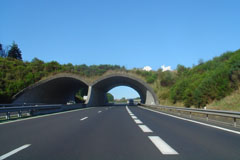
ARC, the International Wildlife Crossing Infrastructure Design Competition, engaged the best and most innovative international interdisciplinary design teams - comprised of landscape architects, architects, engineers, ecologists and other experts - to create the next generation of wildlife crossing structures for North America's roadways. This competition sought innovation in feasible, buildable context-sensitive and compelling design solutions for safe, efficient, cost-effective, and ecologically responsive wildlife crossings.
The ARC competition short-listed five interdisciplinary teams to develop concept designs for a wildlife crossing structure along I-70, a very busy highway in Colorado. In January the jury selected the winning team which envisioned a crossing that merges seamlessly with the surrounding. The winning team as well as the other four finalist teams are presented at http://www.arc-competition.com
Photo: Importance of green bridges is obvious: roads have been acknowledged as a major obstacle to landscape connectivity and ecological vitality.
29 March 2011
Pilot region Isère: improving terrestrial and aquatic connectivity
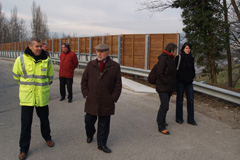
In the Isère pilot region a new green bridge facilitates connectivity for terrestrial animals. A fence on its margins prevents the animals from noise and light of the cars. The bridge has been visited in January. In addition, works for the rehabilitation of a river will start in March. In April a study trip will be organized to present the system of agroforestry to the farmers of the project's area. More information: http://www.pathsoflife.eu (en, fr) or Ms Anne-Sophie Croyal: as.croyal@cg38.fr
Photo: Representatives from the government of Isère and the regional highway company visiting a new green bridge.
29 March 2011
Analyze the situation of ecological connectivity online
Do you want to identify the ideal and priority surface to establish future connectivity measures? Then you can use the online tool JECAMI (Joint Ecological Continuum Analysing and Mapping Initiative-Web services), available on: http://gis.nationalpark.ch/arcgisserver_app/secure/econ_login.html. JECAMI covers the surface of the seven Econnect pilot regions where it e.g. enables visualizing at the same time habitats of species and results of connectivity. Pilot regions can also make use of JECAMI as support for communication with various users and authorities. JECAMI was developed by the Swiss National Park in collaboration with the Arinas company in the frame of the Econnect Project.
29 March 2011
Initialising follow-up activities to the Econnect project
The Econnect project approaches its end in autumn 2011. To develop visions and projects beyond Econnect, the Continuum Initiative organised a think tank workshop last November in Bolzano/I. The objectives were to ensure that good Econnect activities will continue and to involve experts of the think tank in new projects. 20 experts contributed to a differentiated exchange of ideas and the development of projects. Based on presentations of the status quo of ongoing activities within the Econnect project, the participants discussed and defined in four simultaneous working groups the need for future work. Each group developed some promising elements for potential follow-up projects. Several priority aspects were worked out as well. A detailed report on both think tank workshops in 2010 (first one on stakeholder integration in April 2010) is available here (http://www.alpine-ecological-network.org/about-us/ecological-continuum-initiative/think-tank/ecological-continuum-initiative/think-tank/ReportThinkTankWorkshops2010.pdf)
More information on the think tank: http://www.alpine-ecological-network.org/about-us/ecological-continuum-initiative/think-tank
29 March 2011
Processing and communicating Econnect’s results
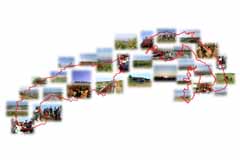
The knowledge transfer work package (WP 8) plays a crucial role in bringing together other Alpine and European activities and projects dealing with ecological connectivity. Thus the key findings of a meeting of representatives from the Alps and the Carpathians in the Czech Republic in September 2010 have been presented as a poster. The poster summarises specific goals, results and outlooks of a common implementation strategy. It has been produced in cooperation with the German Agency for Nature Protection, the Platform Ecological Network, CIPRA and ALPARC. You can download the poster from the Econnect website.
Furthermore, within WP 8 the final products are being prepared based on methods, analysis, results and recommendations from all work packages of Econnect. The main outcomes will be a toolbox on methods and application procedures, a synthesis for policy makers (which is a summary of recommendations derived from project results) and the project's synopsis. This will help to make results of Econnect available and understandable to a large number of persons. Poster download: http://www.econnectproject.eu/cms/?q=download_area
© Pictures in this collage with courtesy of Leopold Füreder, Kerstin Lehmann, Yann Kohler, Martin Pavlik, Matevz Premelc and Thomas Waldner
29 March 2011
Abstracts and proceedings from connectivity events now online
The first international IENE conference "Improving connections in a changing environment" was held in Velence, Hungary, at the end of September 2010. All abstracts can be found linked from the programme at http://www.cbm.slu.se/iene/conf2010/programme.php.
In November 2010, the European Commission organized a workshop in Brussels on the implementation of Green Infrastructure. The meeting was a follow-up to the March 2009 workshop "Towards a Green Infrastructure for Europe," and intended to further develop the implementation of the Green infrastructure concept in the EU. Proceedings from the meeting can be found at
http://ec.europa.eu/environment/nature/ecosystems/green_infrastructure.htm. In both events Econnect and the Alps wide initiatives have been presented.
29 March 2011
Illustrating pressures of human activities on black grouse
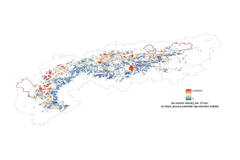
Where do species encounter obstacles to their movements in the Alps? Econnect's work package "barriers and corridors" has now delivered first results to this question for black grouse (Tetrao tetrix). This large bird has been chosen to represent species that will be negatively affected by climate change. Black grouse have a sedentary lifestyle which makes them particularly vulnerable to environmental changes and human disturbance. One of the main artificial disturbances for black grouse are ski lifts. To illustrate the pressure of human activities on black grouse territories, the Econnect partners computed the density of ski resorts per 10 km² in potential black grouse breeding habitat (see the picture). Black grouse relies on several local habitat types during its annual cycle. For the survival of the bird it is crucial that these different habitats patches exist and can be reached. According to experts black grouse requires approximately 20 hectares of continuous breeding habitat during summer. Fragmentation of these local breeding habitats by local disturbance (e.g. leisure activities and infrastructure) is seen as the main problem. For wintering habitats the frequency of perturbation is a serious problem: frequent disturbance induces stress on black grouse and causes imbalances in its energy budget. A similar analysis has been carried out for other species. Barriers were defined individually for each species with regard to their impact on the migratory behavior.
Figure: Density of ski resorts per 10 km² on black grouse potential reproduction habitat for the Alpine arch.
29 March 2011
New guideline for ecological corridors in Styria
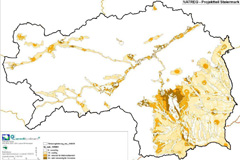
In order to implement a "Green Network" in the Austrian province of Styria, guidelines for regional, interregional and cross-border development strategies creating ecological corridors have been elaborated. This work has been done in close collaboration between the disciplines of spatial planning and ecology in the framework of the "Natreg" project. The Styrian approach contains many interesting elements for connecting open spaces which can be an inspiration for similar processes in other regions of Europe.
The guideline explains the basic ideas, goals, strategies and working steps of connecting open spaces and elucidates the importance of spatial planning, which in the end can protect green zones and habitat corridors with means of legally binding instruments. Furthermore information is given on the method of sectoral working steps as well as the combination of the sectoral results to an expert-proposal for the demarcation of green zones and living space corridors. The chosen method takes into account in particular those regions where there are conflicting interests between nature protection and other human land uses, whereas areas in high altitudes and protected areas are not considered. Open space is considered in its multiple functions. Apart from ecological corridor- and habitat functions, open space also fulfils numerous positive functions for humans regarding social welfare and recreation. Between these functions, numerous synergies exist and the additional value of these areas is highlighted.
The guidelines are available on http://www.natreg.eu/joint-strategy (en, bottom of page)
Photo: The Styrian Green Network does not only take wildlife corridors into account but also areas which are important for recreation. © Natreg project
29 March 2011
Five Econnect pilot regions officially rewarded at the Alpine Conference
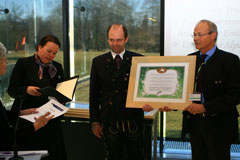
On 8 March 2011 the Alpine Conference has officially recognised and rewarded eight Alpine regions - among which five Econnect pilot regions - for their exemplary work aiming at the creation of an alpine ecological network. The XIth Alpine Conference in Brdo pri Kranju, Slovenia, honoured the efforts of these regions in improving ecological connectivity and implementing in that way article 12 of the Nature Protection protocol of the Alpine Convention. Representatives from the regions received the diplomas in a festive atmosphere with some prominent guests such as the German State Secretary for Environment. The Alpine Conference also decided to transfer the presidency of the Platform from France - who had organised and promoted the rewarding of the regions - to Germany. The eight pilot regions for ecological connectivity of the Alpine Convention (from south-west to north-east):
- South-western Alps (National parc Mercantour/Nature parc Alpi Marittime, France/Italy)
- French department Isère
- Transboundary ecoregion Gran Paradiso - Mont Avic - Mont Emilius (Italy)
- Ecoregion Alpe Veglia ed Alpe Devero (Italy)
- Rhaetian triangle (Engadin/Southtyrol/Trentino/Tyrol, Switzerland/Italy/Austria)
- Transboundary region Berchtesgaden - Salzburg (Germany/Austria)
- Transboundary ecoregion Alpi Giulie (Italy)
- Northern Limestone Alps region (Austria)
The nomination concept is available on http://econet.4teamwork.ch/about-us/platform-ecological-network/pilot-regions (e, d, annexes also in f, i, s)
Captio: Handing over of the diploma to Berchtesgaden - Salzburg pilot region.
29 March 2011
Importance of ecological networks gains (inter)national recognition
Government representatives from around the world underlined how important ecological networks are for safeguarding biodiversity. On the 10th meeting of the Conference of the Parties (COP 10) of the Convention on Biological Diversity in Nagoya/Japan in October 2010 Governments agreed on a package of measures that should help to ensure that the ecosystems of the planet will continue to sustain human well-being into the future. One of the outcomes of the conference is the Document "Decision on mountain biological diversity X/30", which also emphasizes the importance of ecological networks. It states: "Establish, inter alia, conservation corridors and connectivity, where appropriate and possible and taking into account in particular, endemic species, while avoiding the spread of invasive alien species, and transboundary mountain protected area systems, taking into account the need to integrate protected areas into wider landscapes." See the document here: http://www.cbd.int/cop/cop-10/doc/advance-final-unedited-texts/advance-unedited-version-mountains-en.doc
Following up the COP 10, 300 experts representing science, politics, administration and practice met in November 2010 on the conference "Future of biodiversity in Switzerland". A declaration with 11 suggestions has been elaborated stating also the importance of ecological infrastructure in Switzerland composed of large and long-term secured connecting elements.
http://www.biodiversity.ch/downloads/DeklarationBiodiversitaet.pdf (D),
http://www.biodiversity.ch/downloads/DeclarationBiodiversite.pdf (F)
29 March 2011
New tool for custom-made connectivity solutions
Do you want to facilitate the migration of animals within and between their habitats? There are many different ways to do this. Whether you are a farmer, a mayor or leading a tourist company: the detailed search of the new online "measure catalogue" shows you possible activities to improve ecological connectivity that are adapted to your individual situation.
The catalogue gives good practice examples of implementation, explains which stakeholders can get active in improving and establishing ecological networks and describes the legal basis of connectivity measures. All measure descriptions and good practice examples are as well available for download as pdf. You can enrich the measure catalogue with your own implementation examples. The online catalogue is available in English, German, French and Italian. It is provided by the "Ecological Continuum Initiative" and has been realized with financial support from the German Federal Agency for Nature Protection with funds from the German Environment Ministry.
http://www.alpine-ecological-network.org/information-services/measure-catalogue/ (e,d,f,i)
29 March 2011
CARL – Connectivity Analysis of Riverine Landscapes
Within WP5 (barriers and corridors) a specific goal is the Connectivity Analysis of Riverine Landscapes (CARL) throughout the Alps. Recent activities were concentrated on the Alpine wide definition of riverine landscapes and the analysis of existing fragmentation. On a higher resolution level, the spatial analysis of Alpine riverine landscapes focuses on detailed analysis within two pilot regions, in particular the National Park Hohe Tauern and the Northern Limestone Alps. A potential riverine landscape was defined as the river and the surrounding areas by calculating a buffer zone of 100 meters along the river course. As mountain slopes delimit the river valleys, the defined flood plain was laterally restricted to the line where the gradient of the slope was above 35 degree. For example the resulting potential riverine landscape in the whole pilot region Northern Limestone Alps covered 23% of the area. Within these riverine landscapes different fragmentation-causing elements like land use, settlements or specific obstacles were identified and put into the spatial analysis of fragmentation. As an indicator of fragmentation the "effective mesh-size" was calculated, which is based on the probability of two points chosen randomly in an area will be connected to each other. The more barriers in the landscape, the lower the probability that the two points will be connected, and the lower the effective mesh size. In order to compare the river landscapes among each other, the "effective mesh-size" was averaged for each smaller catchment.
The current state of potential barriers and obstacles in the Alpine riverine landscapes are overlayed with the potential and effective habitats of key species. These analyses are still ongoing but we already see very interesting preliminary results.
9 March 2011
New date for the Econnect final conference
The Econnect final conference will be held in Berchtesgaden (D) on September, 26-28. Details about the conference's program will be released soon.
8 February 2011
A corridor for flora in the Italian Alps
The effects of Global Warming can be seen clearly on the flora, particularly on south-facing slopes of the Alps, where there was a rapid increase in the average altitude of the presence of certain species and the disappearing of some others. The process can lead to local extinction, where the altitude does not allow further movement. An increase in temperature results in fact, in mountainous areas, in a "driving force", which triggers migration of species toward higher elevations.
According to a study published by the University of Pavia in fifty years, with an average increase in temperature in the region of 1.2 ° C, 56 species have migrated to higher altitudes (10 to 430 meters in altitude), 25 species are newly found by researchers, 15 suspected of desappearing.
In front of this heavy phenomenon of extinction with potential and actual effects on wildlife and the fall mountain ecosystem, there is nothing to do if not the real need to make research to understand the phenomena and detect potential altitudinal corridors for endangered species.
This is what GLORIA is going to do. For more information about the project, visit http://www.gloriaorobie.it/en
31 January 2011
Outcomes of WP6 final conference

On December 9, 2010, the city of Aosta (I) played host to the final conference of the Legal Barriers Working Package (WP6) of the ECONNECT project. The event was organized by the Italian Ministry for the Environment (MATTM, lead partner of the Working Package, in cooperation with partner Region Valle d'Aosta and technical support from partner European Academy of Bolzano (EURAC).
Speakers discussed several themes closely related to biodiversity, such as agricultural diversity, and the perspective of other organizations such as FAO's Mountain Partnership was presented, but the main focus of the Conference remained on WP6 and its achievements.
The six national assessments on the juridical framework of Alpine countries (Austria, France, Switzerland, Italy, Germany, Slovenia) that formed the object of the first phase of WP6 (Action 6.1) were once again presented to the public. The assessments analyse the legal framework of each country with regards to nature protection, spatial planning, ecological connectivity and trans-border cooperation.
Furthermore, the Conference was the first occasion to present the new bilateral Comparisons drafted pursuant to Action 6.2. Each comparison takes into account the legal framework of a couple of Alpine States (Italy-France, Italy-Switzerland, Austria-Germany, Italy-Austria), highlighting differences and similarities, presenting case studies on pilot regions and assessing potential instruments for the establishment and/or improvement ecological networks in said pilot regions. The studies particularly focus on the European Grouping of Territorial Cooperation -EGTC- as introduced by Regulation (CE) no. 1082/2006 as a potential tool for the joint management of (trans-boundary) protected areas.
The task at hand for MATTM and all WP6 partners was indeed challenging, but the project advanced steadily making good use of the platform provided by the LexAlp project (that, within the framework of INTERREG IIIB Alpine Space Program, led to the harmonization of about 2.000 legal terms in the Alpine languages) and building on other significant experiences such as those of Espace Mont Blanc or the long-standing cooperation between the Mercantour and Alpi Marittime parks (which are soon to implement their own EGTC going by the name of "Alpi Marittime - Mercantour European Park"), just to name a few.
The reason why the final Conference for WP6 was held -and its achievements presented- well in advance of the end of the ECONNECT Project (July 2011) is that MATTM intends the work carried out until this point to be open to the contributions and suggestions of Alpine countries and stakeholders before finalizing it.
In the future, the results of WP6 are meant to serve as a viable tool for all stakeholders (such as protected areas managers) operating on Alpine territory and wishing to establish or improve national, transnational and trans-boundary ecological networks. The analyses provided by WP6 will undoubtedly prove a useful planning instrument and help prevent problems, as projects that take into account juridical issues and potential legal and/or administrative obstacles right from their very beginning have a better chance to turn into successful experiences.
For the future MATTM envisions an information campaign to be carried out in cooperation with WP3 in order to make stakeholders aware of the resources made available by the efforts of all WP6 partners. It goes without saying that what has been done will need to be periodically reviewed and updated to comply with the changes occurring in national legislations over time.
16 January 2011
End of the photo contest
The Econnect photo contest ended. The Econnect team would like to thank all the participants, information about the choice of the winner pictures will be provided soon.
The pictures can be seen by visiting: http://www.flickr.com/groups/econnect/
10 December 2010
An unnecessary step towards fragmentation for the Stelvio NP
The Stelvio National Park will be run directly by local authorities. This rule, adopted by the "Committee of Twelve", foresees that the Park will be managed by the Autonomous Provinces of Trento and Bolzano and the Region Lombardy, in collaboration with the municipalities concerned.
The probability that this decision will lead to an unnecessary and potentially damaging fragmentation of the Park is very high. Once again, the necessities of a coherent action of conservation weren't taken into account; in fact, the effective preservation of the Park's habitat is feasible only with a strong and unique body in charge of balancing the requests from the local authorities and the protection of the Park's habitat.
The Stelvio National Park should have been a big transnational park that, ideally, should have to be joined with the Swiss park of Engadina. Instead, the decision taken by the Commitee goes to the opposite direction; in fact, even if the fragmentation of the Park might assure surer funds, what is certain is that the pressure on the environment, the soil consumption and the hunting activity will raise, since the local bodies are more easily influenced.
Moreover, the dismemberment of the Stelvio NP might become a dangerous precedent for other parks.
30 November 2010
Nature without borders: a conference for a new Schengen for the alpine species
 Flickr - Mike Knell.jpg "(c) Flickr - Mike Knell")
Can a bear be Italian or Swiss? And what about an Edelweiss? Its pure whiteness seems to remember every time that the Alpine fauna and flora don't have flag, but they are part of a unique environment that knows no state boundaries: the Alps. The 6 Alpine states have different laws and different ways to manage protected areas. These legal discrepancies menace the Alpine species because, depending on the state, they have different protection status.
To discuss about this issue and to propose tools to create a sort of Schengen for nature, it was organized the conference "Ecological connectivity and mountain agriculture: existing tools and a vision for the future", which will be held at the Salone di Palazzo Regionale, Aosta (I) on December 9 . The conference will present the work done by the Italian Ministry of the Environment, by EURAC (European Academy of Bolzano) and by the Regione Autonoma Valle d'Aosta. This work compared the different national laws of the Alpine countries to make, then, a "toolbox" to break down the legal barriers that stand between them and, thereby, enabling the protection of nature at Alpine level.
LEGAL BARRIERS THAT THREATEN THE NATURE: EXAMPLES
An example of legal barrier is the one that arise between the Alpine countries of the European Union and Switzerland. Switzerland, in fact, is not obliged to legislate taking into account the EU directives and, if it happens, is not obliged to consider the directive slavishly. This cause differences that may turn out to be a legal barrier (es. Habitat or Bird directive). Another example is the wolf; whereas it is not possible to hunt wolves in Italy, in Switzerland some exceptions may allow their killing. But even within the EU countries there are significant discrepancies, as in the case of the brown bear, hunted in Slovenia, not in the other Alpine countries. A work of harmonization of national legal frameworks was therefore essential, and the "toolbox" built by ECONNECT project partners answers to this need.
ECOLOGICAL CONNECTIVITY AND MOUNTAIN AGRICULTURE
Ecological networks in a broad sense include agriculture as well. Particularly in mountain areas, biodiversity is strictly linked with agricultural and pastoral activities and there are many species either native or adapted to mountain areas. Some foods and animal species are typical of mountainous areas and are a significant part of their genetic heritage. Examples of this aspect can be found all around the Alps. Therefore, their protection and enhancement is fully part of a strategy for the conservation of mountain biodiversity.
There are legal or voluntary instruments that can be used for these products and there are appropriate local marketing and business strategies that can contribute to the development of these networks of quality products, even in economic terms. From this point of view, the FAO will bring a precious contribute to the discussion and will facilitate the connection between food and mountain issues.
(picture: Flickr - Mike Knell)
11 November 2010
Acrobat ibexes climbing a dam
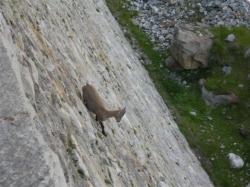
Read the full article from The Guardian (picture: A. Migliorati)
20 October 2010
"The Wall": Less barriers, more life!
Stop - no way through! A giant wall blocks the way of pedestrians in Zurich/CH, Vienna/A, Munich/D, Ljubljana/SI, Milan/I and Lyon/F. For animals, it's the same every day: streets and settlements increasingly fragment their migration routes. Against the background of the 10th Meeting of the Conference of the Parties of the Convention on Biodiversity, being held in Nagoya, Japan in the second half of October, the 'Ecological Continuum Initiative' demonstrated with 'The Wall' on 20 October how important interlinked habitats are for the survival of many plant and animal species.
13 October 2010
The new Econnect newsletter
The new Econnect newsletter is available. Click to download the PDF.
27 September 2010
In Turin (I), more than 150 researchers, local authorities and students to discuss about barriers and ecological corridors
The workshop organized by the Maritime Alps National Park and Valle d'Aosta region has seen researchers, authorities, local stakeholders and students debating on ecological connectivity issues.
During the first session, very interesting cases have been presented.
A participatory approach - The collaboration of the Department of Isère (F) with railway and highway operators, fishermen, farmers, naturalists and urban-planners led to an integrated land management and to a dialogue with more than 80 local municipalities. Thanks to this open and participatory approach, ecological connectivity issues are taken into account during the urban-planning processes.
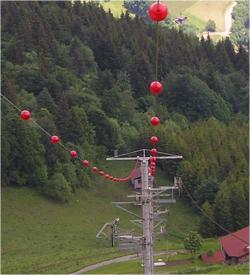
Making barriers visible - Suspended cables of cable-cars and ski-lifts represent a threat to birds, especially to black grouses and grouses. A survey carried out by the Observatoire des Galliformes de Montagne in the French Pyrenees and the French Alps has shown that almost 60% of this kind of plants causes death between birds (684, 476 of which are black grouses and 103 grouses). Some display-systems such as colored cable wires for ski-lifts and floating devices (photo) have proved effective in reducing ski-lifts and cable cars' impact on birdlife.
Birds and electricity - An interesting experience in the Po Delta Park has mitigated the impact of pylons and electrical wires on birds. In this zone has been calculated that around 171 birds per km are killed by power cables. Among the systems put into practice in cooperation with ENEL (the Italian energy operator), perches and platforms on poles and electrical pylons, buried cables, replacement of "classic" cables with elicord ones.
The second session foresaw three separate workshops on aerial, terrestrial and water connectivity. In general, emerged a pessimistic picture the picture due to a lack of planning in the medium - long term. Nevertheless, the dialogue has been fruitful, with several proposals:
- First, it's necessary to improve and increase communication efforts directed to citizens and local authorities and to ensure that the economic value of nature is well understood by these key actors.
- Making the "river contracts" experience be part of regional planning, as well as SIC management plans.
- Regarding air connectivity, a way to improve the situation is to initiate constructive dialogues with the companies that operate the power grid and ski resorts. There is a good opening to the dialogue by this subjects that should be exploited.
Concerning eolic plants issue, it is urgent that impact assessments are taken into proper consideration by the bodies in charge of approving the authorizations. Actually , other requests such as economic incentives, are taken in much more consideration during the environmental impact assessment.
For more information, the PDF presentations are available into the download area.
26 September 2010
Berchtesgaden – Salzburg: analyzing possibilities for improving connectivity
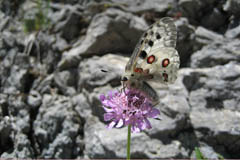
Important steps towards implementing connectivity measures in the course of Econnect have been made in the pilot region „Berchtesgaden - Salzburg". In order to analyse the connectivity of extensively cultivated grasslands in the region a set of butterfly and grasshopper species has been defined. Measures to improve the quality of certain grassland habitats will be planned and implemented subsequently.
Additionally, several other possibilities are analysed to develop ecological connections in the pilot region, like e.g. the revitalisation of a small river. It will support the migration of rare fish species for reproduction as well as enable the development of natural structures of high ecological value. Another major aspect in "Berchtesgaden - Salzburg" is the role of landscape planning, especially in a transboundary context. A workshop jointly organised with the State Government of Salzburg will enhance the transboundary exchange of experts in the field of landscape planning and ecological networks.
Source: National Park Berchtesgaden
26 September 2010
Less barriers, more nature!
Every day we build new obstacles on the migrating routes for animals and we prevent plants to spread freely. In most of the cases we are not even aware of this problem. How would it feel and look like, if our living spaces would suddenly get fragmented by obstacles we cannot easily overcome? Join us on the 20th of October in one of six major cities! We will set up obstacles in busy pedestrian areas of Zurich/CH, Milan/I, Munich/D, Ljubljana/SI, Lyon/F and Vienna/A. The Ecological Continuum Initiative prepares this big international event to raise the awareness on the interruption of ecological corridors towards a wide public. Apart from setting up the obstacles, a number of accompanying activities will take place.
More information: fabio-guarneri@bluewin.ch
Source: The Ecological Continuum Initiative
26 September 2010
Final conference for the legal barriers work package
The city of Aosta (I) will host the final conference of the legal barriers work package of the Econnect project. The event is scheduled for the coming 9th of December. Besides presenting the most relevant achievements of the legal component of the project, the conference will focus strongly on the existing links between ecological connectivity and mountain farming.
As for the strictly legal component, both the updated versions of the already circulated national assessments and new bilateral comparative outlooks will be presented at the event, including practical case studies and model legal instruments, such as the EGTC. The goal of these bilateral comparisons is to assess existing national and regional legal frameworks concerning protected areas in neighbouring Alpine countries, and single out the most appropriate legal instruments to enhance the ecological connectivity among protected areas and create ecological corridors, allowing the species to migrate between different living spaces.
Source: Ministry for the environment Italy
26 September 2010
France: new guidelines for the implementation of ecological networks
1. Guideline for strategic decisions, 2. Methodological guideline for the elaboration of ecological network plans, 3. Guideline for transport infrastructure management. Download (only in French): http://www.developpement-durable.gouv.fr/Les-productions-du-comite.html
Source: CIPRA International
26 September 2010
Pilot region of Isère: bridges for more traffic safety
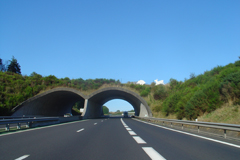
In the framework of the project "Paths of life" the pilot region Isère signed a contract with the motorway company to build a green bridge. Work will start before the end of the year.
Apart from that, the pilot region Isère has published a guide presenting various experiences they led since ten years in different areas and the methods being used. The publication "Methodological guide of the hierarchical ecological networks - Ten years of experiments in Isère" is available in English and French and has been produced in the framework of the knowledge transfer work package. It will soon be available on the Econnect website. Isère welcomes feed backs on this publication.
Source: Conseil général de l'Isère
26 September 2010
55 questions on alpine ecological connectivity
A joint research project of Econnect, the Platform Ecological Network under the Alpine Convention and the Ecological Continuum Initiative aims to identify „The 55 most urgent questions concerning ecological networks in the Alps" by bringing together all "alpine actors" such as national administrations, protected areas, researchers, stakeholders and various NGOs.
The study employs a methodology which has been successfully applied in this context in other regions. To date, the 22 participating institutions have submitted some 450 questions. These questions will undergo a second round of review and consolidation before a final prioritization and selection process is carried out at a workshop beginning of December in Switzerland. The output of the process will be a list of 55 questions which reveal the lack of robust scientific evidence or novel approaches with regard to ecological connectivity in the Alpine region. Subsequently the list of questions will be published in a peer-reviewed journal and disseminated to a wider public within the Alpine region and beyond, in order to help researchers and donors focus on urgent projects.
Source: University of Vienna
26 September 2010
Transfering knowledge of the Econnect project
In the frame of the "knowledge transfer" work package a policy-recommendation document has being elaborated, aimed at reaching the policy makers and responsible actors at local/regional, national and European level. The document will present concrete suggestions for political contents aimed at ensuring effective cross-border cooperation and the further development of ecological networks in the alpine region.
In this way the results of the Econnect project will be made broadly available and far reaching effects of the project will be ensured.
Apart from that a project synopsis is being produced containing the syntheses of objectives, activities, results and achievements of the Econnect work packages. The synopsis will ensure the sustainability of the project results, their broad distribution and their comprehension. Furthermore a toolbox-document is being compiled containing all methodologies adopted by the different work packages and project partners during the realisation of Econnect project goals and can be used as a methodological reference work.
All these products will be discussed at the project partner meeting of Econnect in Bolzano on 15-16 November.
Source: University of Innsbruck
26 September 2010
New cross-border project supports Ecological Network at local level
Within the scope of the interregional Italian/Swiss programme, the "DIVERSICOLTURA - Biodiversity in the Cultural Landscape" project was recently approved. The project encompasses the Swiss Münstertal and the neighbouring Italian Obervinschgau. This area is part of the Econnect pilot region Rhaetian Triangle.
As part of the project, measures are being implemented to preserve traditional cultural landscapes as living spaces for endangered species of fauna and flora. A joint strategy is being developed for the promotion of biodiversity and for cross-border living space connectivity. There are also plans to upgrade cross-border rivers as corridors for animals and plants and set up educational trails. DIVERSICOLTURA is therefore consolidating and supporting the efforts of Econnect, the Platform Ecological Network and the Ecological Continuum Initiative for pan-Alpine ecological networks at local level.
The Rock Butterfly (Chazara briseis L.) is threatened by extinction. It can only be found in the Swiss Münstertal because of the large expanse of species-rich dry grasslands in the neighbouring Italian municipalities of Taufers and Mals. To further the Rock Butterfly, grazing land will be cleared in Münstertal and grazing plans optimised within the framework of DIVERSICOLTURA. Besides the Rock Butterfly, a large number of other animals and plants will profit from this. The forestry group and the affected farmers will also benefit in terms of work and ecological direct payments. DIVERSICOLTURA is ensuring that the Rock Butterfly's habitat in the Italian Vinschgau remains in good condition so that these measures make sense in the long term.
Source: Swiss National Park
26 September 2010
Discovering connectivity gaps for the Brown Bear
The Austrian Environment Agency has undertaken an assessment of the existing and potential habitat of the Brown Bear (Ursus arctos) in the Alps. This was the first step to investigate potential connectivity between habitat patches. The Brown Bear is one of eight species for which similar work has been conducted and is still in progress.
In addition the assessments of the existing and potential habitats of lynx, wolf, red deer, black grouse, griffon vulture, otter and the European bullhead will be made.
As it is difficult to identify corridors for the Brown Bear visually at an alpine scale, the potential habitat was classified into core areas and areas connecting, or so called bridges. Bridges are not threatened areas per se, but they are of particular importance to connect core areas. The analysis was conducted using an algorithm called the morphological spatial pattern analysis developed by the Joint Research Center of the European Commission and implemented in GUIDOS, an open source software package.
In an additional step the effects of anthropogenic barriers, in particular motorways, on long distance dispersal of the Brown Bear were investigated. Using a graph based approach, it was found that motorways impaired the migratory ability of the bear.
In conclusion, there is sufficient potential habitat in the Alps to sustain viable bear populations and there are some anthropogenic migratory obstacles. Further topics that should be addressed are the levels of tolerance within the population and the problem of illegal shootings.
Source: Austrian Environment Agency
26 September 2010
First atlas of biodiversity risk in Europe
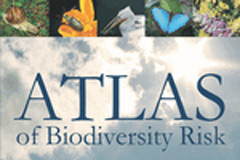
The new "Atlas of Biodiversity Risk" is the first of its kind to describe and summarise in a comprehensive, easy-to-read and richly illustrated form the major pressures, impacts and risks of biodiversity loss on a European and global level.
It is backed up by more than 100 case studies and among others also contains articles on habitat fragmentation and on ecological networks as an answer to climate change.
The Atlas is addressed to a wide spectrum of users. Scientists will find summaries of well-described methods, approaches and case studies. Conservationists and policy makers will use the conclusions and recommendations. Lecturers and teachers will find good examples to illustrate the main challenges in our century of global environmental changes.
The Atlas combines the key results of the major European research project ALARM (68 partner organisations in 35 countries in Europe and other continents) with some core outputs of numerous other research networks. In total, 366 authors from 43 countries contributed to the 280-page Atlas. More information: http://pensoft.net/newreleases/14595.htm
Source: CIPRA International
26 September 2010
A common tool for pilot regions
The second international meeting of the pilot regions which proceeded in Dobbiaco/Toblach (I) on April 22, 2010 bore its fruits. Indeed, the pilot regions adopted a common tool, entitled JECAMI (Joint Ecological Continuum Analysing and Mapping Initiative-Web services).
This instrument has been developed by the Swiss National Park in collaboration with the Arinas company. The benefits of this initiative are manifold. The "JECAMI" tool provides a harmonized strategy to the pilot regions in order to analyze the situation of ecological connectivity.
The integrated valuation model shows the value of each part or patch of the analysed landscape concerning its promotion of the ecological continuum. The analysis area can be uploaded or be drawn online. The analysis results are thematically divided into 10 different indicators which reach from biology, landscape ecology and geography up to socio-economy. This allows to compare the results in different areas and therefore a broad interdisciplinary discussion for all interested parties.
The pilot regions will be able to identify the ideal and priority areas to establish future measures of connectivity.
They also can make use of the Internet tool in order to support communication towards the various users and authorities. JECAMI is easily accessible and will increase the visibility of connectivity. It will be possible to visualize at the same time the habitats of the species and the results of connectivity. Econnect awaited an effective tool to incorporate and to combine the spatial results of the project and a facilitated access of all the stakeholders concerned. With JECAMI this is done! Towards the end of the project time, it will be also available for public use.
Source: Swiss National Park
26 September 2010
International workshop: Follow-up and new projects beyond Econnect
The Ecological Continuum Initiative organises a workshop to develop visions and to set the course for an assured continuation of projects beyond Econnect. The workshop will take place on November 17th 2010 in Bolzano (I).
The workshop aims at defining new project ideas and elaborating projects on ecological connectivity in the Alps. The maintaining of approved partnerships, as well as the build-up of new project partnerships is an additional goal of the workshop.
Apart from the think tank pool of experts, the collaborators from Econnect, especially collaborators and stakeholders from all pilot regions, and other running connectivity projects are kindly invited to participate.
The first workshop in the frame of the think tank was about stakeholder integration and was carried out on April 23th 2010 in Toblach (I).
More information on the think thank and the workshops:
http://www.alpine-ecological-network.org/index.php/the-ecological-continuum-initiative/thinktank
Source: The Ecological Continuum Initiative
26 September 2010
Legal barriers and potentials for a pan-Alpine ecological network
How can legal instruments contribute to the objectives of ecological connectivity in the Alps? This question was in the focus of an international technical seminar organised by CIPRA France and CIPRA International on 6 May in Grenoble/F, in the frame of the "legal barrier" work package of Econnect.
About 50 participants from several Alpine countries and from different sectors such as law, administration, protected areas and environmental associations exchanged their experiences and points of view along constructive discussions. They gathered the main obstacles and potentials of legal instruments. The results of the discussions will contribute to the further work within Econnect.
The presentations are available on http://www.econnectproject.eu/cms/?q=download_area/en#Seminaronlegalbarriers-May2010. A synthesis report in English and French will follow soon.
Source: CIPRA France
26 September 2010
Experiences from the Carpathians: a manual on creation of ecological corridors
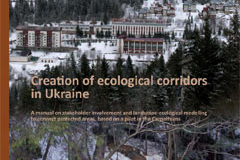
Based on a pilot project of realizing trans-boundary ecological connectivity in the Ukrainian Carpathians a manual on stakeholder involvement and landscape-ecological modeling to connect protected areas has recently been published. The manual "Creation of ecological corridors in Ukraine" can be recommended as a guide for good practice of ecological corridor creation. It is made to assist policy makers as well as those responsible for the establishment and management of ecological corridors, providing conceptual, procedural and practical support.
The pdf in English can be downloaded at: http://www.carpathianconvention.org/NR/rdonlyres/9BA918DA-61A9-4DAD-B3EA-405640A182B5/0/CreationofecologicalcorridorsinUkraine_English.pdf
Source: CIPRA International
13 September 2010
Workshop: "The ecological connection on the Western Alps: concrete examples on the field"
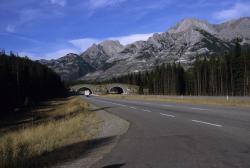
Fish passes, wildlife crossings, electrical cables laid underground to make birds migrate safely. These and other experiences will be told during the workshop "The ecological connections on the Western Alps" scheduled on September 24th, 2010 at the Congress Center of Regione Piemonte, Corso Stati Uniti 23, Turin (I).
Only in the province of Cuneo (I), 419 road accidents were reported in 2008-2009, which involved both drivers and wildlife. Of these, 237 involved deers and 151 involved wild boars. Such accidents could be avoided if only were created "crosswalks" for animals, such as green bridges, for example. To this end, the experience of the Isère region (France), which will be presented during the workshop, shows that ecological corridors are effective not only to protect the Alpine biodiversity, but also to ensure safety for motorists.
FROM ECOLOGICAL ISLANDS TO ECOLOGICAL NETWORKS
The problem of fragmentation of Alpine habitats is increasingly present. Too often urban planning does not take into account the nature as a system that keeps moving and migrating and, therefore, that requires appropriate corridors to allow species to remain in good ecological condition. The concept of "ecological island" (e.g. parks, protected areas) is no longer enough to adequately protect the Alpine fauna; it is necessary to move from ecological islands to ecological networks.
Fortunately, there are experiences of ecological networks already implemented in Italy, France and Austria. The workshop aims at disseminating these good practices to all participants.
Organised in the frame of the European project ECONNECT, hosted by the Piemonte Region and organized by the project partners "Parco Nazionale Alpi Marittime-Mercantour" and "Regione Autonoma Valle d'Aosta" (I), the workshop will host a lot of experts on the subject.
The first part of the morning will be dedicated to the presentation of the more significant and interesting "good practices" and will be chaired by prof. Bogliani (University of Pavia). In the second part new paradigms of urban planning that takes into account ecological connectivity will be proposed. During the afternoon three workshops will specifically address three issues: terrestrial, aerial and water connectivity.
Please find attached the agenda.
To register to whe workshop, please write to: sede.operativa@parcoalpimarittime.it
23 August 2010
New publication on approaches, tools and activities for implementing a pan-Alpine ecological network
During the last few years various documents, publications and reports which reflect approaches, tools and activities that support the implementation of an ecological network across the Alps have been published. Some of this information had not been made available for a wide public until now. Others exist only as comprehensive independent publications. Therefore these activities and results have now been compiled and summarised by the Ecological Continuum Initiative in the report "Implementing a Pan-Alpine Ecological Network - A Compilation of Major Approaches, Tools and Activities". Along with the report, a CD is provided containing all information that is digitally available. You can download the report here: http://www.alpine-ecological-network.org/index.php/latest-news-mainmenu-2
26 July 2010
Econnect in Valle d’Aosta
Next August, 11th in the pilot region Monte Rosa (I) a group of experts has organized an evening dedicated to local stakeholders (farmers, municipalities, tourism bodies, Alpine guides and operators of ski lifts) where different aspects of the relationship between biodiversity and agriculture will be analyzed.
The evening includes, in addition to a segment where it will be described the naturalistic side of the Site of Community Importance "Ambienti Glaciali del Monte Rosa (Monte Rosa's glacial environment), another part specifically dedicated to the description of ECONNECT project and, later on, a part where the importance of an agriculture taking into account natural aspects, such as ecological connectivity, will be described.
The meeting will be concluded by a short speech about typical Valle d'Aosta's products and a small tasting of the same products. Enclosed is the program of the evening.
For more information: c.sedda @ regione.vda.it
5 July 2010
Linking-up the German roads for animals and for a better traffic safety
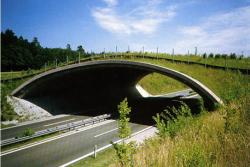
The German Government is developing a National Connectivity Programme which foresees to build wild animal crossings at the most important sites of migrating corridors. This year the first systematic research on ecological corridors in Germany has been finished, representing an important scientific groundwork for the implementation of the Programme.
The National Connectivity Programme will address different aspects of connectivity, e.g. traffic planning and investments, nature protection, spatial planning, research, awareness raising and international co-operation.
The investments in animal crossings will be done on the basis of a priority paper, listing the countries most important connectivity sites. In the frame of an economic stimulus package approximately 69 million euro should be used by the year of 2011 to support seventeen measures, among these predominantly the building of green bridges. The National Connectivity Programme is based on the fact that investing in connectivity helps rising the traffic safety and in the same time serves nature protection.
The German road network is one of the densest in whole Europe. It causes a strong fragmentation of habitats and represents a high level of risk for migrating animals as well as for drivers. Every year more than 3'000 persons get injured on German roads, more than 20 get killed. The German Hunting Association estimates at least 250'000 accidents involving wild animals each year. These accidents cause material cost amounting to 500 million euro.
More information: http://www.bmu.de/pressemitteilungen/aktuelle_pressemitteilungen/pm/45883.php (D)
Source: CIPRA International (www.cipra.org)
23 June 2010
An example of ecological corridor at Parco delle Groane (I)
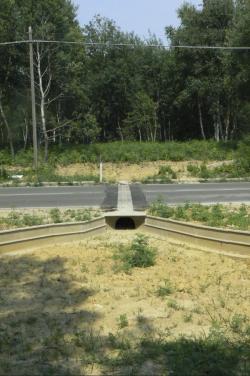
Inside the Parco delle Groane, a protected area that extends at the foot of the Alps nearby the city of Milan, it was implemented an underpass for amphibians and small fauna that allows this small wildlife to cross safely the road that split the park in two.
The broader aim of such an intervention, which foresees a second round of works starting very soon, is to preserve and increase the biodiversity of the Park and, eventually, appreciate the ecological corridor between the two Sites of Community Importance Pineta di Cesate e Boschi delle Groane.
Even though a quantitative survey hasn't been done yet, some observation confirmed that the underpass is currently used by amphibians.
Such a good practice is of the kind that Econnect project wants to implement within its Pilot Regions in order to preserve amphibians and small wildlife.
For more information, click here (I)
Source: WWF Italy
8 June 2010
Obstacles and facilitations for the movement of fishes
An inventory of all the artificial barriers that impede the flow of rivers has found out that French rivers are interrupted by 60,000 dams, weirs, locks, mills etc. The inventory has been recently published as a on-line-map where the works are shown divided by department, municipality or watercourse. All these works obstruct the movement of migratory aquatic organisms and the transport of sediments, thereby affecting ecosystems.
In some cases, these barriers are inconsistent with the objective set by law on the rivers and aquatic environments (LEMA), which is to put watercourses in good ecological conditions by 2015.
The Institute of the University of Kassel (D) has developed a new kind of facility that, through the use of pumps, creates a flow able to attracts fishes. With an injector a more intense flow is created at the entrance of the fish pass, that is exactly where it is needed. In this way, fishes can find more easily the entrance of the artificial pass without having to use more water to feed the fish pass. Moreover, special barriers made of synthetic material ease further the entrance of the fishes in the right canal and prevent them from ending up in the canal that feed the turbines.
Map of the barriers: http://carmen.carmencarto.fr/66/ROE.map (F), http://www.actu-environnement.com/ae/news (F), http://www.sonnenseite.com (D)
Source: CIPRA International
22 May 2010
Clicks beyond the borders
Taking advantage of the Biodiversity Day, on May, 22nd starts the initiative "Clicks beyond the borders" promoted by the partners of the project "ECONNECT restoring the web of life". The initiative is intended for amateur and professional photographers and aims at gathering meaningful images that express the idea of overcoming barriers in the Alpine arc.
All species need to move, migrate and wander within their habitats. Although, too often men prevent them from moving freely: a highway or a railroad, a border or differences in legislation between countries become an obstacle that undermines the natural movement of wildlife.
The challenge for the participants is to communicate this problem: their pictures will tell stories of insurmountable barriers and of strategies devised by animals and plants, facilitated also by the aid of man, to overcome them. Participants can submit a maximum of three digital pictures, taken strictly in the Alps, by January 15th 2011, into the group created on the social network FLICKR http://www.flickr.com/groups/econnect/, where people can register and upload their pictures.
A prestigious panel of experts chaired by Denis Curti, critic and director of the photographic agency Contrasto Italy, will evaluate the best 12 photos from March 15th, 2011. "Using photography as a tool to communicate a so difficult subject" said Denis Curti, "is a great opportunity to spread to non-insiders an issue such as ecological connectivity, rarely addressed by general media but no less urgent".
The pictures will be evaluated by the experts according to criteria of adequacy as regards the theme, creativity, originality, quality and technique. The 12 chosen pictures will be shown in an exhibition to be held during the ECONNECT final conference in Berchtesgaden (D) in mid 2011 and will be used to create a calendar to be distributed to all the conference participants.
The best works will be awarded with:
- A weekend-stay in the pilot region of Alpi-Marittime at "La locanda del Sorriso" (www.locandadelsorriso.com);
- A weekend-stay in the pilot region of Berchtesgaden-Salzburg at "Alm & Wellnesshotel Alpenhof **** (www.alpenhof.in)
- A basket of typical Italian products coming from WWF Italy's protected areas;
- WWF-White Star photographic book "Last and wild."
Other awards are in the course of being defined.
10 May 2010
Crossing the Alps to promote ecological networks
Peter Sürth, a German engineer for wildlife management, is organizing an expedition across the Alps to draw attention on the importance of ecological networks. This initiative aims at supporting the conservation and the improvement of biodiversity. Moreover, Sürth aims at promoting the coexistence between humans and large wild animals such as wolves, bears and lynx.
Along the way there are foreseen multiple events to raise awareness on these topics. The interested parties can participate in each stage or section of the trail. The expedition, which relies on the support of several companies in the outdoor sports industry, is divided into three tracks that consist of week-day stages. The first path, through Austria, is beginning at the end of August 2010 in Mariazell (A), the last two will follow next year.
For further information: http://www.derwegderwoelfe.de/alpenexpedition.htm (de).
13 April 2010
Seminar on legal barriers
CIPRA FRANCE invites you to the international technical seminar "Legal barriers and potentials for the implementation of ecological corridors in the Alps". The seminar takes place on 6th May 2010, Grenoble (F), Maison de la Nature et de l'environnement de l'Isère (MNEI). It is part of Econnect work package 6 "legal barriers" and is organised in collaboration with the WP7 (implementation in pilot regions).
Legal practitioners, experts in spatial planning, protected areas managers, scientists, politicians and partners of the ECONNECT project are invited to discuss thematic issues in order to overcome the juridical difficulties to the implementation of ecological networks.
Registration is free. Please fill in and send back the registration form before 30 April. A French-English translation service will be available.
29 March 2010 -
29 March 2010
March 2010 Econnect newsletter on line
28 March 2010 -
28 March 2010
Berchtesgaden – Salzburg: Improving the ecological network of extensive grasslands
Extensively cultivated grasslands are important landscape elements for ecological connectivity in the pilot region Berchtesgaden - Salzburg. Improving these habitats will help to safeguard species such as butterflies, dragonflies or grasshoppers. This is one of the tasks of the subprojects within ECONNECT which are currently being finalised.
According to expert opinions as well as spatial analyses, extensively cultivated grasslands have been identified as one important aspect of connectivity in the region. In order to maintain functional meta-populations of the mentioned insects, open spaces of a certain quality have to be existent in appropriate distances. But in the German-Austrian pilot region more and more cultivated areas are abandoned due to the low potential for profit. ECONNECT intends to support a process to improve the ecological network of extensive grasslands, e.g. by developing and testing innovative management and financing approaches. As a first step, a set of species is currently being identified in order to investigate the species-specific requirements for an ecological network of extensive grasslands in the pilot region.
The representatives of the pilot region Berchtesgaden - Salzburg furthermore presented their activities at the workshop "Networking diversity", which was organized by the Ecological Continuum Initiative in Berne/CH on February 12th in the frame of the conference NATUR. The presentations and the synthesis report are available on www.alpine-ecological-network.org/index.php/services-mainmenu-8/downloads-documents#natur2010.
28 March 2010 -
28 March 2010
Continuum Fact Sheets help implementing connectivity measures in the Alps
The Ecological Continuum Initiative supports the implementation of ecological connectivity measures on the ground with a new series of fact sheets for local stakeholders in German, French and Italian language. Some fact sheets are already available online.
The fact sheets are not only informative printed documents. Their main objective is to move to action. They target stakeholders who are implementing ecological networks, e.g. from the ECONNECT pilot regions. The series of ten fact sheets covers the most important fields of work where connectivity measures should be implemented: agriculture, forestry, water management, hunting and fishing, spatial planning, traffic, nature protection, and tourism. Special fact sheets will also be published for municipalities and other important players in the establishment ecological networks.
Each fact sheet explains the importance of its respective sector for ecological connectivity and lists concrete connectivity measures that stakeholders are encouraged to implement. Furthermore, good-practice examples from the Alps are presented in each fact sheet and show that connectivity measures really work. These good examples should motivate the stakeholders to imitate them.
The printable pdf versions of the fact sheets on Nature Protection (in German, French and Italian), Agriculture (in German and French, Italian version follows soon) and Traffic (German, other languages follow) are already available for download at: www.alpine-ecological-network.org/index.php/services-mainmenu-8/downloads-documents (en). The printed versions will be made available to the ECONNECT pilot regions in May.
28 March 2010 -
28 March 2010
Sharing connectivity knowledge within and beyond the Alps and visualising corridors and fragmentation
100 persons from eight European countries followed the invitation to the workshop in Grenoble, France, in November and used this opportunity for active knowledge transfer on ecological networks. The workshop discussions have helped the ECONNECT partners to agree on the appropriate methods which they are now using for modelling habitats and corridors for the whole Alps and for visualizing barriers.
In several presentations methodological expertise from various case studies was provided and shared with the participants. Discussion groups were formed to ensure the sharing of knowledge within three important issues of the project methodology and activity: Aquatic corridors, terrestrial corridors and participatory approaches. The workshop as a tool for the active knowledge transfer of the ECONNECT work package 8 profited from the expertise and direct participation of all attendees. Thus, the workshop yielded rich and manifold results for all involved stakeholders, conservation managers, non governmental and governmental organisations, scientists, and opinion leaders.
Based on the expert discussions during the workshop, partners of work package 5 could agree on appropriate methods they will use to model habitats and corridors for the whole Alps and to visualize barriers. For this task functional landscape connectivity corridor models have been chosen. Selecting the appropriate modelling methods was the first important step towards the identification of corridors and barriers. The next step of work package 5 will be to collect observation records of the indicator species (four sylvan mammals, two birds, two water bound species). Various experts were contacted and the data set of one bird species (black grouse) is sufficient to start the modelling process. Nevertheless, better data availability is still desirable. A test run with black grouse is performed at the moment and the first results will be available soon.
28 March 2010 -
28 March 2010
Rhaetian Triangle: new online tools and support for local initiatives
The Swiss National Park (SNP) is currently developing a web based tool to analyze barriers and corridors of the large pilot region Rhaetian Triangle. Furthermore, two local initiatives are concretely acting for the restoration of ecological connectivity.
The new map application will allow comparing a freely defined area with other areas in the neighbourhood and identifying the fields with high need of action according to selected indices. This tool will help experts to identify the connectivity hot spots and the ecological continuum as well as raising awareness in a wider field of the eco-interested community in the pilot region.
Apart from developing the web tool, the ECONNECT team of the SNP is also supporting two local initiatives in the Swiss-Austrian-Italian pilot region Rhaetian Triangle to restore ecological connectivity.
In the Austrian region around the river Inn, the Environment Advocacy of Tyrol (Landesumweltanwaltschaft) and WWF Tyrol have started a project to improve the connectivity of selected species along the historical route "Via Claudia Augusta". Measures should be implemented to reduce the barrier impact of the heavily used road infrastructures in this area. This should help to measurably improve the migration of the selected species. ECONNECT supports the project team with knowledge concerning the selection of species, defining corridors and barriers and ensures the access to international know how. Moreover, this exemplary project should be promoted towards the Italian and Swiss partners in the pilot region Rhaetian Triangle.
In South-Tyrol, Italy, the nature protection group Vinschgau has submitted a resolution to protect the Rambach stream between the Swiss border and the estuary into the Etsch. The local authorities are planning to implement a small scaled hydropower station in the Rambach with very limited economic value. In the last years, the Swiss part of the Rambach has been restored and is nowadays an outstanding example of a renaturalized stream. The realization of the planned project in South-Tyrol would destroy all efforts in the Swiss Val Müstair concerning connectivity of this water body and reduce the value of the ecological system distinctively. The resolution for the protection of the Rambach is therefore an extraordinary example of the importance of ECONNECT and the international collaboration on ecological connectivity.
28 March 2010 -
28 March 2010
Alpine riverine landscapes: connectivity, barriers and fragmentation
How strongly is a river landscape fragmented? What are the most important barriers and obstacles in Alpine rivers? These questions are in the focus of the Institute of Ecology from University of Innsbruck within its ECONNECT activities. The results will be visualized with the help of GIS and contacts to regional watershed authorities established for the reduction of barrier impacts and restoration.
Riverine landscapes are important habitats, dispersal and migration routs and corridors for aquatic but also for terrestrial animals and plants. In densely populated areas of the Alps and especially in areas surrounding protected areas riverine landscapes were altered intensively and often degraded in various ways. As a consequence, the natural distribution, movements and migration of aquatic and water-bound organisms is highly disturbed or inhibited. Work package 5 aims at improving this situation by analysing the potential to increase connectivity and decrease barrier effects and fragmentation.
In a first step barriers are analysed that are effective in the longitudinal, lateral, vertical and temporal dimensions of river systems. Fragmentation indices are applied for the visualisation of fragmentation. In parallel, typical habitats and riverine species (brown trout, grayling, bullhead, tamarisk, ...) are identified. Potential barriers that can have an impact on the habitat and movements of these species will be visualised on maps.
In the present project period, work focuses on specific pilot regions. Effective barriers and obstacles within the riverine landscapes will be identified and contacts to regional watershed authorities established for the reduction of barrier impacts and restoration.
28 March 2010 -
28 March 2010
Isère Department: tearing down the barriers
The French Isère Pilot Region is very active in the field of ecological connectivity. Besides ECONNECT, since February 2009 the region is engaged in another EU Project named "Paths of life". This project will last six years and has a budget of nine million Euro.
In the framework of this project several meetings were organized on the field with all concerned stakeholders (mayors, farmers, hunters, naturalists,...) to share the elaborated cartography of the vegetal structures and the knowledge of the territory.
A fish pass is currently under construction. It will enhance the transmissibility at the river Breda, especially for trout. All fish have been temporarily removed from the river bed to protect them from dying during the working process. Furthermore, other construction works are planned, like an underpath or the installation of thermal detectors systems for animals.
Detailed maps showing the planned project activities and further information on the project are available on the website: www.pathsoflife.eu (en, fr)
28 March 2010 -
28 March 2010
Understandable and visualised ECONNECT website
The ECONNECT website www.econnectproject.eu has recently been translated into the four project languages (French, German, Italian and Slovenian) and will soon be updated with maps.
The work package 3 "Information and Publicity" is furthermore going to launch a photo contest that aims at involving photographers all across the Alps. The contest will start in June and last until the end of December. The theme of the contest and the members of the jury have already been decided. The contest will be based on Flickr social network and on the ECONNECT website. More information will be soon available on www.econnectproject.eu.
Thanks to the "GeoPortal" tool developed in the frame of work package 4, maps of the Pilot Regions will be put online to make people understand where the project is acting and which measures ECONNECT is evaluating and implementing. The GeoPortal will thus make the website more appealing. The maps will be presented using Google Maps. This will allow showing the location of all measures put in place by the Pilot Regions.
28 March 2010 -
28 March 2010
Green light for deer and lynx in the Alpine-Carpathian Corridor
In future, wild animals will be able to move more easily between the Alps and the adjoining Carpathian Mountains. That is the objective of the recently initiated cross-border project Alpine-Carpathian Corridor. The EU is providing approximately 2 million Euros.
Taking into account issues related to nature conservancy, spatial planning, traffic, agriculture, forestry, hunting and tourism, and heavily involving the municipalities concerned, it will define concrete measures to safeguard interconnections among biotopes and realize these in the form of pilot projects. Overpasses with greenery will for example help deer and other animals safely to cross motorways and other large infrastructural works on their treks.
Under the overall responsibility of the Austrian Land Lower Austria, eleven project partners from Austria and Slovakia in the areas of administration, research, nature conservancy and infrastructure cooperate in the project, which will run until the summer of 2012. It makes an important contribution to the objectives of the Alpine, Carpathian and Biodiversity Conventions.
Sources and information: http://www.alpenkarpatenkorridor.at (de), http://www.wwf.at/de/akk (de)
28 March 2010 -
28 March 2010
Maps and data on ECONNECT available online
The "GeoPortal" which is the central project repository for all spatial data and map products of ECONNECT is now online on http://gis.eurac.edu. Furthermore, the working group "Implementation strategy and data needs" has met to discuss the data situation at the current stage of the project.
The GeoPortal allows browsing, viewing, downloading and uploading data and metadata and also contains an overview map showing all pilot regions in the Alps as well as overview maps for each pilot region showing protected areas and Natura 2000 sites. The maps are available for anyone interested in the ECONNECT Project.
The ECONNECT Working Group "Implementation strategy and data needs" met on 5th February on a workshop in Bolzano/I. The data situation at the current stage of the project was summarised by the work package 4 leader EURAC research, and subsequently discussed by all workshop participants. It has turned out that the spatial data needed for the analysis in the pilot regions, i.e. the calculation of the Continuum Suitability Index, matches the data collected so far. Gaps still remain in some regions where discussions with the administration are ongoing. During the meeting it was pointed out that to make best use of more detailed data sets, the various regional data sets should not be harmonized in a sense to match them to the smallest common denominator.
25 February 2010
International seminar on legal barriers
As a partner of ECONNECT work-package 6 concerning legal barriers, which is run by the Italian Ministry for the Environment, CIPRA France organizes an international seminar that will take place in Grenoble (F) on May, 6th.
Following the previous work steps of the work-package, the seminar will be the occasion to discuss and compare the results gathered through a questionnaire recently sent to the ECONNECT pilot regions about the juridical dimension and approach of their activities for the development of ecological connectivity. Moreover, the seminar aims at identifying the juridical obstacles, barriers and opportunities to the development of ecological connectivity at a trans‐alpine scale.
This meeting will be a time of accounts, sharing and analysis of the different juridical situations and experiences between the Alpine countries on the basis of the activities set up in the pilot regions.
We are looking forward to the active participation of ECONNECT partners, legal practitioners, experts in spatial planning, protected areas managers, scientists and politicians to discuss thematic issues in order to overcome the juridical difficulties to the implementation of ecological networks.
The program of the seminar will be soon available on the website.
18 February 2010
An ecological network frame becomes law in Lombardia
In February, 18th, the Regione Lombardia, Italy, officially approved the Regional Ecological Network (REN), which includes and considers in the regional territorial planning all priority conservation areas defined by the WWF European Alpine Programme and its partners in Gap in 2001. It is an important decision for Italy, for all the Alpine countries and the projects, like Econnect, concerning connectivity; in fact, it is the first time that an ecological network frame acquires force of law in Italy.
This pivotal decision now implies that all provinces have to align to this resolution in all successive planning stages, taking into account the areas included in the REN. The Regione, the Fondazione Lombardia Ambiente and private sponsors will additionally finance a biannual monitoring plan, starting this year.
16 February 2010
Northern Limestone Alps: involving local population
Within the Alpine Space project „ECONNECT", interviews with 170 stakeholder of the three provinces Upper and Lower Austria and Styria were held. People have been asked about their knowledge, experience and ideas concerning the connectivity of habitats and possible barriers by using a questionnaire.
These interviews aimed at receiving an overview of opinions on this theme as well as information on planned or ongoing projects dealing with ecological connectivity in the region.
In addition, stakeholders have been interviewed about habitats and species, which is important for connectivity in the pilot region, and whether they are interested to participate in the elaboration of projects.
At the same time, it has been created a database with funding possibilities. It includes all funding resources with might fit to projects dealing with ecological connectivity.
On December, 9th the results of these two activities were presented to approx. 45 participants at the visitor centre Ennstal (National Park Kalkalpen, Upper Austria).
The next steps within ECONNECT include the exchange of information and experience with stakeholder groups as well as the elaboration of objectives, themes and projects in the Pilot region, divided into four working groups:
Communication - public relations - regional development - tourism
Rivers and riverine habitats
Natural forests
Meadows and alpine pastures
3 February 2010
Austria: pressure caused by exploitation rose at the highest altitudes
The psychological block that so far prevented from planning and authorizing projects in sensitive high mountain areas further decreased during 2009. The Austrian Alpine Club (OeAV) warns against the destruction of landscape and recreational resources on the Alps and asks for a framework for a well-balanced territorial planning, in order to preserve the typical Alpine landscape.
All across Austria can be observed the tendency to build cableways and other skiing infrastructures inside the boundaries of protected areas and other high-value zones: examples of this inclination are the foreseen construction of a cableway across Warscheneck protected area, an underground cog railway through the central region of the Hohe Tauern National Park from Sportgastein to Schareck or the project of a cableway inside the "peace-zone" of Kalkkogel.
In 2010 the OeAV will examine closer all these cases; during a press conference held at the end of 2009, the OeAV urged the Tirol government to define a framework that shouldn't allow the exploitation of protected areas.
The Piz Val Gronda represents a very interesting example of this process. For 30 years this peak, which rises between Austria and Switzerland, has been menaced by regular attempts of exploitation. So far, these plans have been rejected thanks to the exceptional richness in flora of this region and because of its exceptional geological and geomorphologic variety.
The scientific paper by OeVD named "Piz Val Gronda - a peculiar natural oasis inside the Austrian Alps" is downloadable here: http://www.alpenverein.at/naturschutz/Publikationen/Fachbeitraege/index.php?navid=43 (in German).
27 January 2010
Catalogue of connectivity measures: new publication in English, French, German and Italian
The catalogue explains how extensivisation of agricultural use, species conservation measures along transport routes or creating synergies with tourism can contribute to the implementation of ecological networks. 69 exemplary measures from all Alpine countries show how areas or structures can be created, conserved or restored so that they can play a role as connecting elements within an ecological network. An associated Excel database helps people in pilot regions or in all other regions where connectivity needs to be improved to find measures corresponding to different contexts. The translations have been financed by the German and French Environment ministries.
The catalogue and the database can be downloaded on: http://www.alpine-ecological-network.org/index.php/services-mainmenu-8/downloads-documents
21 January 2010
Alpi Marittime: ecological corridors preventing car accidents
Not only ecological corridors preserve biodiversity, but they are also an effective tool to reduce car crashes on motorways.
Econnect is an innovative European project related to the "Alpine Space Program 2007-2013" developed to restore connections between different habitats in Alpine areas. Furthermore, the problem of car crashes with animals is a major issue for Econnect. Wild animals, as ungulates, birds of prey, fishes and amphibians, are always moving on the same routes in order to feed or to reproduce. It may happen that these routes are crossed by motorways; this situation puts a potentially dangerous situation both for drivers and terrestrial species.
According to Alpi Marittime natural park, one of the seven Pilot Regions that constitutes the project, during the last two years car crashes which involved ungulates have been 419 in the Cuneo district (data by Cuneo Provincial Administration, Flora and Fauna Safeguard District). In most cases those accidents, besides being hazardous for drivers' life, could have been avoided with a better territorial planning, a more careful infrastructure planning and a warier use of existing technologies. New ways to aid the passage of animals across busy roads are tested in the French department of Isère (an Econnect Pilot Region as well), by placing motion and heat detectors on both sides of a road which, using an intermittent signal, warn the driver of a wild animal oncoming passage.
The Alpi Marittime national park was chosen due to its high biodiversity value and its geographical position, considered as a link among the Alps and Provence, the Mediterranean sea and the Padana plain. Other Italian institutions supporting this project are: Aosta Valley Autonomous Region, the European Academy of Bolzano, the Ministry of the Environment and WWF Italy. The Parc National du Mercantour (France) and the Fluvial Park Gesso and Stura, directly involved by the Alpi Marittime Park with other authorities and institutions which are able to contribute to concretely deal with problems regarding conservation and biodiversity because of their competence, are even involved in this project.
Econnect project aims at creating ecological corridors (natural spaces where spreading of flora and fauna is free and not hampered by artificial barriers) among several Alpine areas, a good way to secure the preservation of genome, that is essential for the survival of species. Moreover, Econnect promotes the creation of a net that, by a common approach to the problems, permits crossing scientific and methodological "frontiers".
Three main plans make the Italian Park deserving attention:
- Aerial connectivity: reducing the danger for alpine galliformes (black grouse, rock ptarmigan and rock partridge) due to hanging cables of ski lifts or power lines. Improvements for safety of migrating birds of prey will be made, particularly all along the Stura Valley course, where wind turbine will be probably installed.
- Water connectivity: considering all the barriers placed on creeks and finding solutions to reduce or eliminate hindrances for the moving of water flora and fauna.
- Terrestrial connectivity: locating infrastructures considered as a problem for most sensitive species.
15 October 2009 -
16 October 2009
International conference: "Ecological network in the Alps – a response to climate change that will conserve biodiversity?" - Berchtesgaden, Germany
This meeting aims to identify the link between global warming and the lost of biodiversity. In deed within the next decades, Central Europe and especially the Alpine space have to take into account enormous changes of the composition of species and habitats in our latitudes. The establishment of an ecological continuum facilitating migration in altitude but mainly in a south-north transect may be one of the answers we can develop from today on.
30 September 2009
Second ECONNECT's newsletter available
16 July 2009
The TransEcoNet project: creating transnational ecological networks in Central Europe.
TransEcoNet is a project implemented through the CENTRAL EUROPE Programme and co-financed by ERDF wich main objective is elaborating strategies and recommendations on how to develop and manage transnational ecological networks in Central Europe.
To preserve natural and cultural heritage in the long run, TransEcoNet strives for a better connection of protected and less or unprotected landscapes across national borders. In particular the focus is on unprotected landscapes, the so-called gaps, between protected areas. The project study areas are situated within or between the wide-ranging ecological networks of the Alps, Carpathians and of the Green Belt. For more info see the project flyer and the website: www.transeconet.eu
18 May 2009 -
20 May 2009
Pilot Regions meeting
A meeting of the ECONNECT's Pilot Regions has been held in Zernez (CH) from 18 to 20 May 2009.
The meeting has involved not only Pilot regions but also representatives of WP4 (data management), WP5 (barriers and corridors) and WP6 (legal barriers). The discussion has lead to a coordinated approach, based on indicator species and indices, for the implementation of the goals of ECONNECT on ecological networks.
16 April 2009
ECONNECT'S TRANSNATIONAL WORKSHOP THE LEGAL FRAMEWORK OF PROTECTED AREAS IN EACH ALPINE STATE, DOMODOSSOLA (ITALY)
This workshop, organized by European Academy of Bolzano/Bozen (EURAC research), Università Cattolica del Sacro Cuore - Centro Studi Val d'Ossola with the institutional support of Italian Ministry of the Environment, Land and Sea, is the first of two workshops (the second workshop will be organized by CIPRA in France) to explore the legal barriers to ecological connectivity in the Alps. The workshop aims at identifying the legal situation of protected areas in each Alpine State (types of protected areas and their legal framework), with an emphasis on transboundary issues, such as Natura 2000 and Emerald Network and the creation of an Alpine Ecological Network.
The Workshop will be followed by a Thematic Conference Transboundary Cooperation among Alpine Protected Areas, the 17 April 2009 in Domodosola.
1 March 2009
Newsletter 1
4 November 2008 -
5 November 2008
KICK-OFF SCHEDULING
The kick-off of the ECONNECT Project will take place at the University of Veterinary Medicine in Vienna (Austria) on November 04-05, 2008.
The public kick-off is scheduled on November 04, 2008, from 16:00 to 18:30.
The participation to the kick-off is free; simultaneous translation will be available for German, Italian, French and English.
4 November 2008 -
5 November 2008
Kick-off
The public kick-off of the ECONNECT Project took place at the University of Veterinary Medicine in Vienna (Austria) on November 04-05, 2008.
The two day meeting has been a great occasion for discussion and more importantly, next steps in project implementation were reviewed. As Chris Walzer (lead Partner) points out: "not only will this project have to deal with actual physical barriers such as roads and dams on rivers but maybe more importantly it strives to also tackle the barriers "in the heads" of the various stakeholders and authorities". Besides the internal meetings , a public project presentation was held at the University of Veterinary Medicine in Vienna. This was a good occasion for the pilot regions to directly address the public. Additionally, in a panel discussion, drivers and obstacles for ecological connectivity in the Alps were addressed and discussed.